

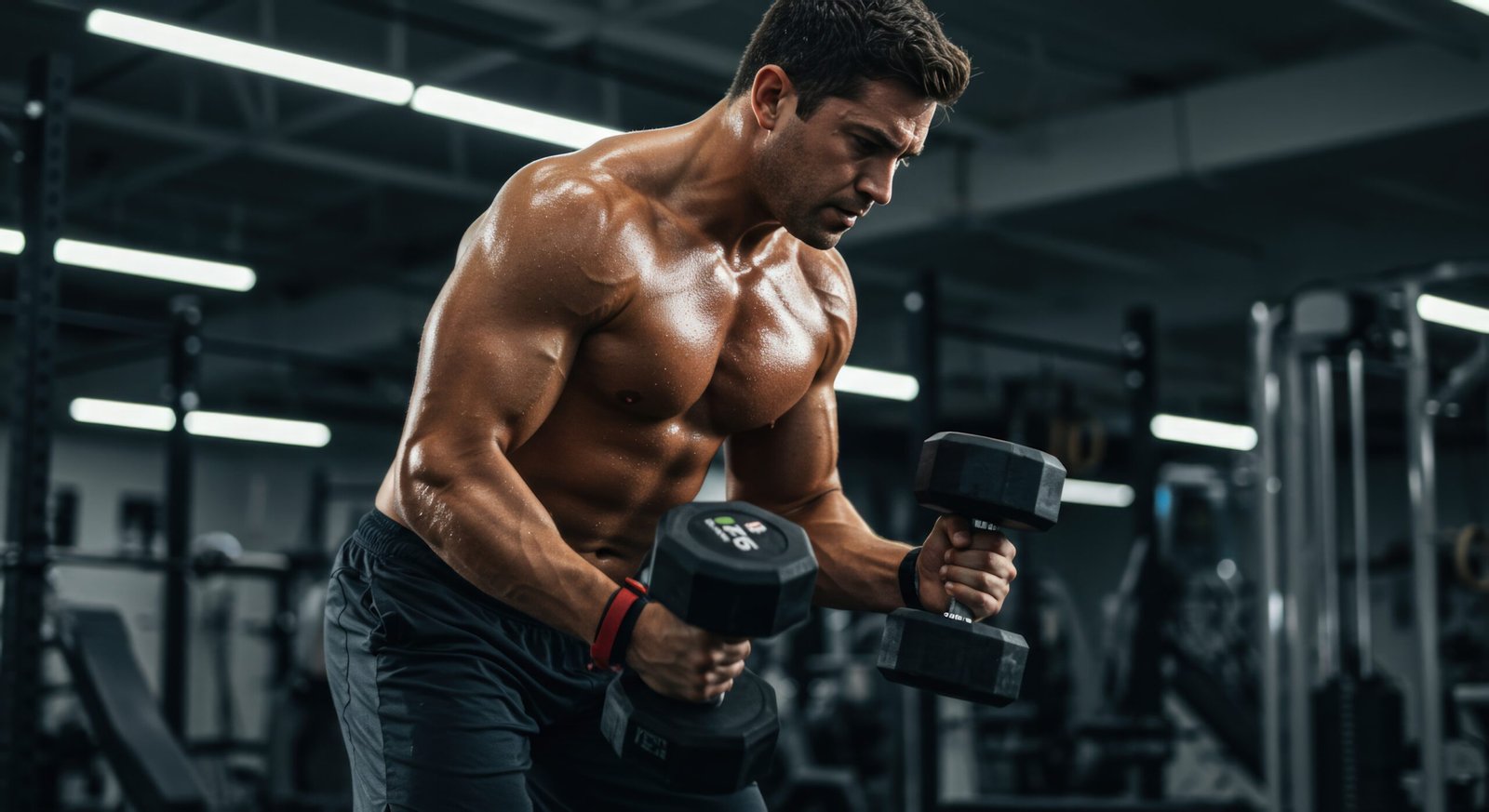
Overview Dumbbell Flyes
I’m a big fan of Dumbbell Flyes because they do one thing beautifully: they stretch and load the chest through a sweeping arc that presses can’t quite match. Whether you call them dumbbell chest flyes, pec flyes exercise, or just flyes, the goal is the same—target the pecs with precision while keeping the shoulders happy.
Benefits
- Emphasizes chest stretch and adduction for fuller pec development
- Complements pressing strength by training the pecs in a long range of motion
- Encourages shoulder control and scapular stability
- Versatile: can be done flat, incline, decline, or on the floor
Muscles Worked
- Primary: Pectoralis major (sternal and clavicular fibers)
- Secondary: Anterior deltoids, biceps (as stabilizers), serratus anterior, rotator cuff
Equipment You’ll Need
- A pair of dumbbells that allow perfect control
- A flat, incline, or decline bench (or the floor)
- Optional: wrist wraps if grip limits you before your chest does
How to Do Dumbbell Flyes (Step-by-Step)
- Set your bench angle (0–30° for flat to slight incline; 15–30° incline to bias upper chest).
- With dumbbells on your thighs, lie back and press them over your chest, palms facing each other, soft bend in elbows.
- Pack your shoulders: retract and lightly depress your shoulder blades into the bench, ribs down, feet planted.
- Inhale and open your arms in a wide arc, maintaining that fixed elbow angle—think “hug a big tree.”
- Lower until you feel a deep pec stretch without shoulder pain or losing control. Forearms should stay vertical at the bottom.
- Exhale and drive the dumbbells back together by squeezing your pecs, not by changing elbow angle.
- Stop just short of the bells touching to keep tension, then repeat.
- Keep elbows slightly bent and locked; don’t turn it into a press.
- Range of motion is personal—go as low as you can maintain tension without anterior shoulder discomfort.
- Keep wrists neutral and stacked over elbows; don’t let the bells drift behind your body line at the bottom.
- Think “lead with the inner elbow” on the way up to cue adduction.
- Slow 2–3 second eccentric; smooth, controlled concentric.
Common Mistakes Dumbbell Flyes
- Going too heavy—if your elbows are changing angle or shoulders lift, the weight is too much.
- Letting dumbbells crash together at the top, losing tension.
- Excessive arching or flared ribs which shifts load away from the pecs.
- Dropping too low and anteriorly translating the shoulder (ouch, biceps tendon).
Programming
- Hypertrophy: 3–4 sets of 8–15 reps, 1–2 reps in reserve (RIR)
- Strength-endurance: 2–3 sets of 12–20 reps, 2–3 RIR
- Tempo: 3-1-2 (down–pause–up) works wonders for mind–muscle connection
- Frequency: 1–2 times per week after your main press (bench, incline, or dips)
Variations
- Incline Dumbbell Flyes: Slight incline biases the clavicular (upper) pecs.
- Decline Dumbbell Flyes: Targets lower fibers and can feel friendlier on shoulders.
- Floor Flyes: Built-in depth limiter; great for beginners and joint-friendly training.
- Single-Arm Flyes: Extra core demand and unilateral correction.
- Mechanical Drop Set: Start with flyes, then without changing weight, switch to neutral-grip presses to extend the set.
Incline vs Flat vs Decline
- Flat: Balanced overall pec stimulus.
- Incline (15–30°): Slightly more upper chest and anterior delts.
- Decline (10–20°): Emphasizes lower/sternal fibers and may reduce shoulder stress.
Dumbbell Flyes vs Pec Deck
- Dumbbells challenge stabilizers and allow natural shoulder/scapular motion.
- Pec deck provides constant machine-guided resistance and is easier to learn; great for high-rep finisher work.
Safety and Shoulder Health
- Warm up with band pull-aparts, scapular circles, and light presses.
- Pain is a red light—shorten ROM, reduce incline, or switch to floor flyes.
- Keep humerus slightly in front of the torso line at the bottom to protect the anterior shoulder.
Beginner-Friendly Dumbbell Flyes Progression
- Week 1–2: Floor flyes, 3×12–15 with light weights
- Week 3–4: Flat bench flyes, 3×10–12, add 2.5–5 lb per bell if RPE ≤7
- Week 5+: Introduce incline flyes and tempo work
Dumbbell Chest Flyes
- Bench Press: 4×5–8
- Incline Dumbbell Flyes: 3×10–12 @ 3-1-2 tempo
- Push-Ups or Dips: 3xAMRAP (leave 1–2 reps in tank)
- Cable Flyes or Pec Deck: 2×15–20 pump sets
FAQ
- Should I touch the dumbbells at the top? You can, but pausing just shy keeps tension higher.
- What if my shoulders hurt? Try a shallower ROM, floor flyes, or slight decline. If pain persists, consult a professional.
- How heavy should I go? Pick a weight you can control for perfect form—ego stays home for flyes.
Coach’s Notes
I treat flyes as a precision tool: moderate load, high control, deep stretch, crisp squeeze. When form is spotless, the chest responds. When it’s sloppy, the shoulders complain. I aim for mastery over numbers here.








Leave a Reply