

Introduction Amazon Rainforest Tours
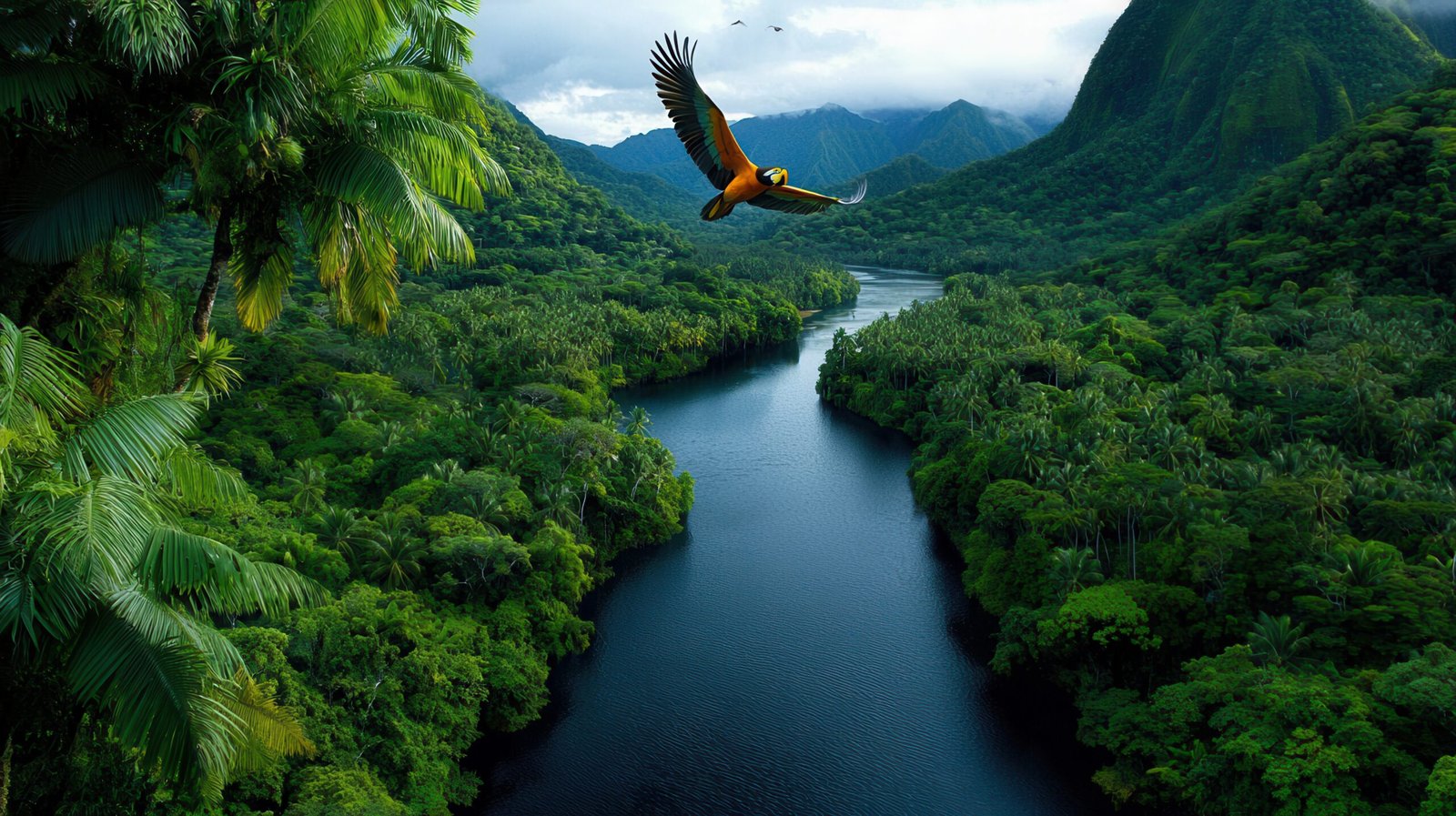
Amazon Rainforest Tours covering an area of over 5.5 million square kilometres, the Amazon Rainforest is one of Earth’s greatest treasures. This vast region, stretching across nine South American countries, is home to more than 40,000 plant species. The lush and complex tapestry of plant life not only sustains countless animal species but also plays a critical role in global climate health, making the Amazon vital for life everywhere.
The Canopy Giants
Rising up to 60 meters above the forest floor, the canopy trees of the Amazon define the forest’s landscape. These giants include species such as the Brazil nut tree (Bertholletia excelsa), kapok tree (Ceiba pentandra), and rubber tree (Hevea brasiliensis). The canopy forms a dense, continuous layer of leaves, capturing most of the sunlight and dictating the structure beneath. This layer serves as a habitat and food source for many creatures, from monkeys to birds and countless insects. The immense size and strength of these trees help them survive in the competitive rainforest environment.
Life in the Shadows: Understory and Ground Plants
Beneath the towering canopy, the understory is a world of filtered light and high humidity. This layer hosts plants that have adapted to survive with limited sunlight. Cocoa trees (Theobroma cacao), whose seeds are the source of chocolate, thrive here alongside delicate heliconias known for their vibrant flowers. The forest floor is carpeted with ferns, small palms, and seedlings waiting for their chance to reach the sunlight above. Many of these plants have broad leaves to maximize photosynthesis and often rely on animal pollinators due to the scarcity of wind.
Epiphytes and Vines: Masters of Adaptation
Some of the Amazon’s most fascinating plants live far above the ground, using other plants—and not the soil—for support. Epiphytes, such as orchids and bromeliads, anchor themselves high up on tree trunks and branches, extracting nutrients from rainfall and decaying debris. These plants do not harm their hosts but benefit from better access to light and air.
Meanwhile, lianas and woody vines thread their way up toward the canopy. Species such as philodendrons and passionflowers may start life on the forest floor but soon begin climbing trees, sometimes growing hundreds of meters long. This competitive strategy allows them to access sunlight without investing energy in thick, self-supporting trunks.
Unique Adaptations and Ecological Roles
Amazonian plants have evolved countless adaptations to thrive in ecological niches. Thick, waxy leaf coatings prevent mold and allow water runoff in the ever-humid environment. Chemical defences, such as the toxic latex of some Euphorbiaceae species or the alkaloids in certain trees, deter hungry herbivores and have provided humans with valuable pharmaceuticals.
Symbiotic relationships are also common. Leguminous trees fix nitrogen in the soil, boosting fertility, while certain plants depend on bats, birds, or even fish for pollination and seed dispersal.
Importance for People and Planet
The plants of the Amazon are fundamental to global ecological stability. They store vast amounts of carbon, help regulate rainfall patterns, and influence climate worldwide. For indigenous communities and modern societies alike, the forest provides food, materials, medicines, and economic opportunities. Brazil nuts, rubber, and many tropical fruits are only a few resources that trace their origins to Amazonian flora.
Conclusion Amazon Rainforest Tours
The plant life of the Amazon Rainforest represents one of the most intricate and diverse ecosystems on Earth. From towering canopy trees to delicate orchids and resourceful vines, these plants not only sustain an incredible web of life but also provide invaluable benefits to humanity. Protecting and understanding this unique flora is essential—not only for the Amazon’s future but for the health of our entire planet.









Leave a Reply